Why Copeland Scroll Industrial Retrofit Standards Are Crucial for Industrial HVAC Systems
In the modern industrial landscape, HVAC and refrigeration systems serve as the operational backbone of facilities. Copeland Scroll compressors have long been the industry benchmark for efficiency and reliability. However, with increasingly stringent environmental regulations and the global phase-out of legacy refrigerants such as R-22, aging systems face critical operational challenges. This is where Copeland scroll industrial retrofit standards become essential.
Retrofitting or modernizing industrial HVAC systems is a strategic investment to ensure operations remain seamless, efficient, and fully compliant with modern environmental mandates. It is not merely about replacing hardware; it is about safeguarding business continuity, reducing operating expenses (OPEX), and elevating corporate reputation through sustainable engineering practices.
Driving Regulatory Compliance and Operational Efficiency
The primary catalyst for retrofitting is the regulatory landscape surrounding refrigerants with high Ozone Depletion Potential (ODP) and Global Warming Potential (GWP). With R-22 undergoing a global phase-out, adhering to official retrofit standards enables organizations to transition to eco-friendly alternatives without sacrificing system reliability, ensuring full compliance with frameworks like the Montreal Protocol and the Kigali Amendment.
Beyond environmental compliance, operational efficiency presents a compelling business case. Next-generation Copeland Scroll compressors are engineered specifically to maximize the thermodynamic performance of modern refrigerants. Through a well-executed retrofit, electrical power consumption can drop significantly, yielding substantial energy savings over the equipment’s lifecycle.
Understanding Copeland Scroll Retrofit Standards: Emerson’s Guidelines
Retrofitting an industrial HVAC system requires a rigorous technical understanding of mechanical components, refrigerants, lubricants, and operating envelopes. Emerson—the manufacturer of Copeland—provides comprehensive engineering guidelines to ensure retrofit procedures are executed safely, effectively, and reliably. These guidelines form the foundation of industrial retrofit standards.
The standards encompass:
-
Selecting compatible replacement compressors and alternative refrigerants.
-
Executing proper lubricant conversion.
-
Recalibrating or replacing system peripherals such as Thermal Expansion Valves (TXVs), elastomeric seals, and filter driers.
Bypassing these protocols can lead to severe operational failures—ranging from capacity degradation and compressor motor burnout to safety hazards caused by improper pressure ratings.
The Foundation of Safe and Efficient Refrigerant Conversion
At the core of most industrial retrofits is refrigerant conversion. Engineers must verify the thermodynamic compatibility of existing systems with the replacement refrigerant, evaluating piping materials, operating pressures, and mass flow rates. Copeland’s application bulletins provide detailed compatibility matrices for this exact purpose.
System flushing is equally critical. Residual mineral oil (MO) or alkylbenzene (AB) oil from legacy R-22 circuits must be systematically evacuated before introducing HFC/HFO refrigerants and Polyolester (POE) lubricants. Inadequate flushing risks severe compressor damage due to oil breakdown, loss of lubrication, and chemical sludge formation.
Navigating the Transition from R-22 to Eco-Friendly Alternatives
Moving from R-22 to modern alternatives is a complex engineering task. Replacement refrigerants possess distinct thermodynamic profiles:
-
R-407C: Often utilized as a direct R-22 retrofit with minimal mechanical modifications, though engineers must account for temperature glide in evaporators and condensers.
-
R-410A: Operates at significantly higher discharge and suction pressures (approximately 50-60% higher than R-22), typically requiring a comprehensive mechanical re-evaluation of system pressure vessels and piping.
-
R-448A / R-449A: Excellent low-GWP alternatives that provide balanced thermodynamic performance and energy efficiency for commercial and industrial refrigeration.
Aligning with GWP Environmental Compliance
Selecting a replacement refrigerant involves balancing technical viability with GWP environmental compliance. Transitioning to low-GWP refrigerants is vital for reducing a facility’s carbon footprint and meeting long-term sustainability targets. Options like R-448A and R-449A are increasingly favored for their favorable environmental profiles, directly improving corporate sustainability (ESG) metrics. Consulting with HVAC application engineers is strongly recommended to align mechanical performance with corporate environmental goals.
Oil Management: The Critical Role of POE Oil Conversion
When converting from HCFC refrigerants (R-22) to HFCs or HFOs, changing the compressor lubricant is mandatory. Modern refrigerants are immiscible with legacy mineral or AB oils. Therefore, POE oil conversion is a non-negotiable step in Copeland scroll retrofit standards.
Because POE oil is highly hygroscopic—meaning it rapidly absorbs moisture from ambient air—atmospheric exposure must be strictly minimized. Moisture inside a refrigeration loop reacts with POE oil to form organic acids, leading to copper plating, insulation degradation, and premature compressor failure. Utilizing high-capacity dual-stage vacuum pumps and charging oil under deep vacuum are standard engineering practices.
Step-by-Step Oil Replacement Procedure
To maintain system integrity, technicians must follow a structured procedure:
-
Evacuation & Drainage: Recover all legacy refrigerant using certified recovery equipment. Drain the existing mineral/AB oil from the compressor, oil separators, and accumulators. A solvent flush of the line sets may be required.
-
Filter Drier Replacement: Always install new liquid-line and suction-line filter driers specifically rated for POE lubricants and the replacement refrigerant.
-
POE Oil Charging: Charge the compressor with Emerson-approved POE oil, strictly limiting open-air exposure to prevent moisture ingress.
-
Deep Evacuation: Pull a deep vacuum on the entire system—down to 500 microns or lower—to remove non-condensable gases and residual moisture.
-
Refrigerant Charging: Charge the system with the designated replacement refrigerant by weight, adhering to liquid or vapor charging rules specific to the refrigerant blend.
Practical Implementation of Corporate HVAC Upgrade Projects
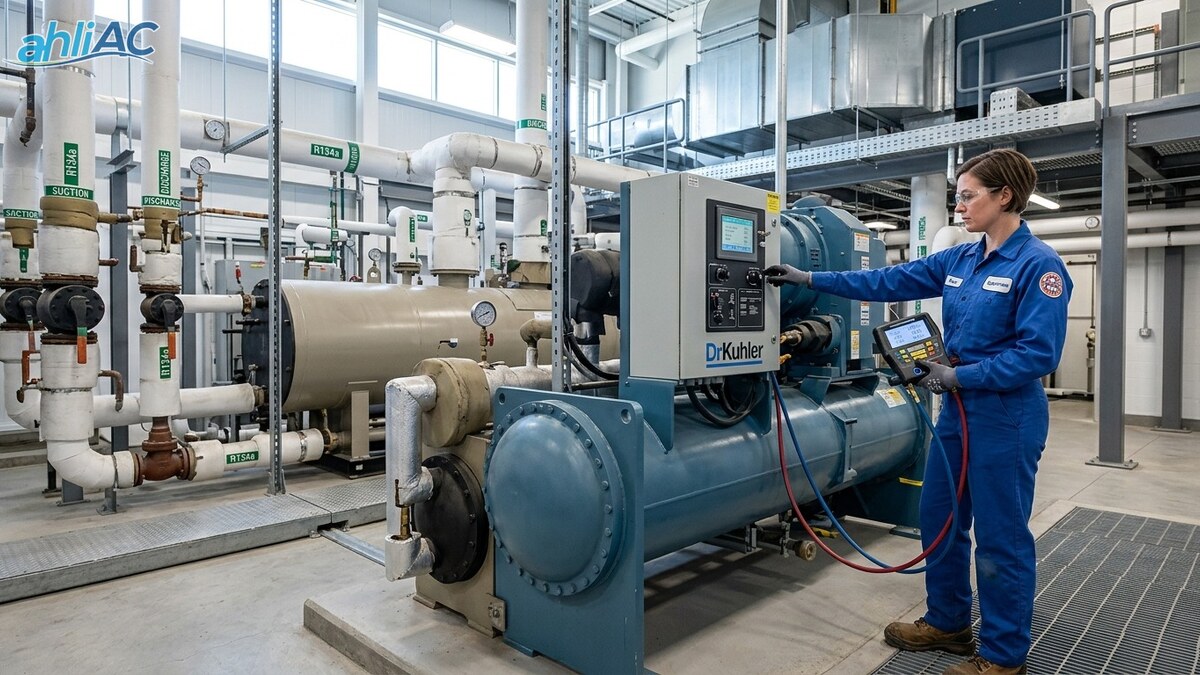
Executing an industrial retrofit requires meticulous project planning and field execution. A comprehensive pre-retrofit audit must be conducted to assess existing pipework, insulation, heat exchangers, and electrical controls. Ensure all necessary equipment—including the replacement Copeland Scroll compressor, POE lubricant, filter driers, TXVs, and vacuum equipment—is on-site before initiating downtime.
Key Phases of Execution
-
Detailed Planning: Develop a comprehensive checklist, project timeline, and resource allocation plan to minimize operational downtime.
-
Isolation & Recovery: Shut down the equipment, perform Lockout/Tagout (LOTO), and recover the legacy refrigerant safely according to environmental regulations.
-
Disassembly & Flushing: Remove the old compressor and incompatible mechanical components. Flush line sets to eliminate old oil residues and particulates.
-
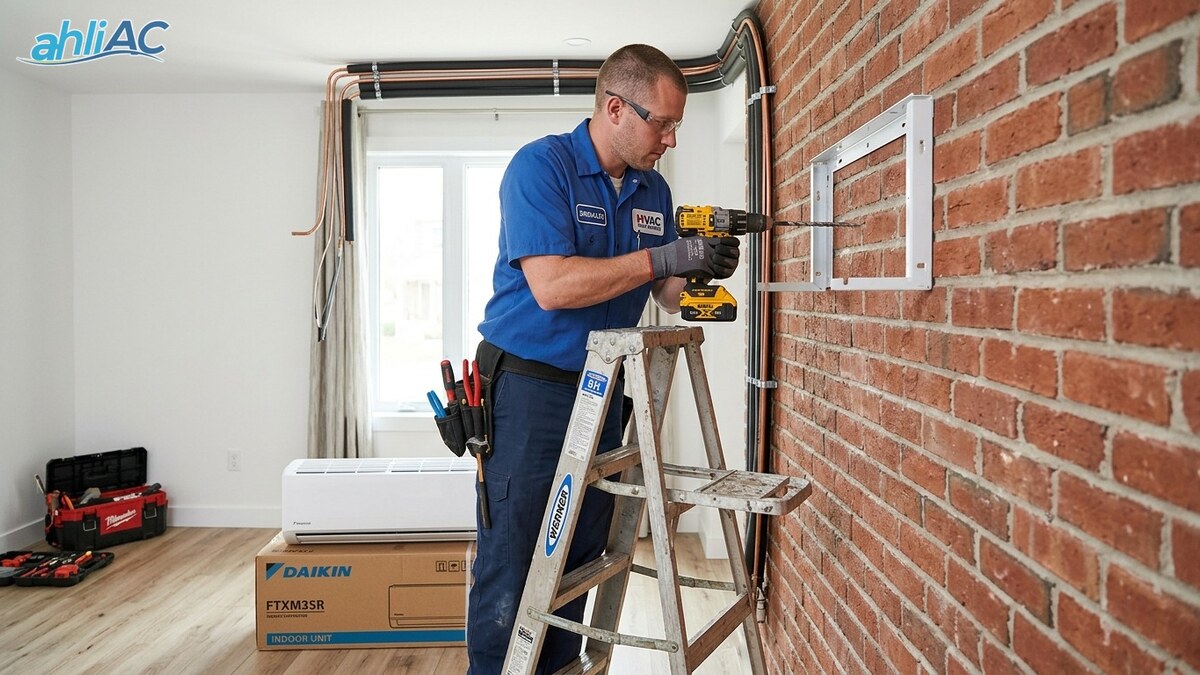
Installation: Mount the new Copeland Scroll compressor, TXVs, and filter driers. Braze all copper connections under a dry nitrogen purge to prevent internal oxidation.
-
Evacuation & Charging: Perform a pressure leak check with dry nitrogen, pull a deep vacuum, introduce the POE oil, and weigh in the new refrigerant charge.
-
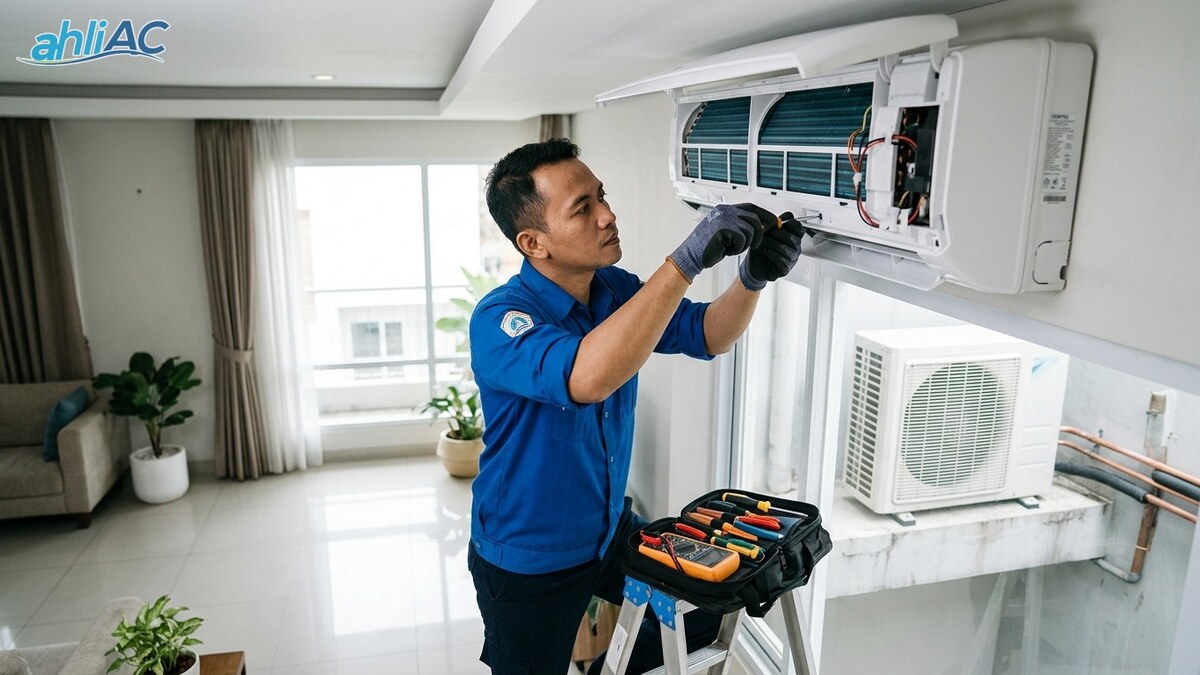
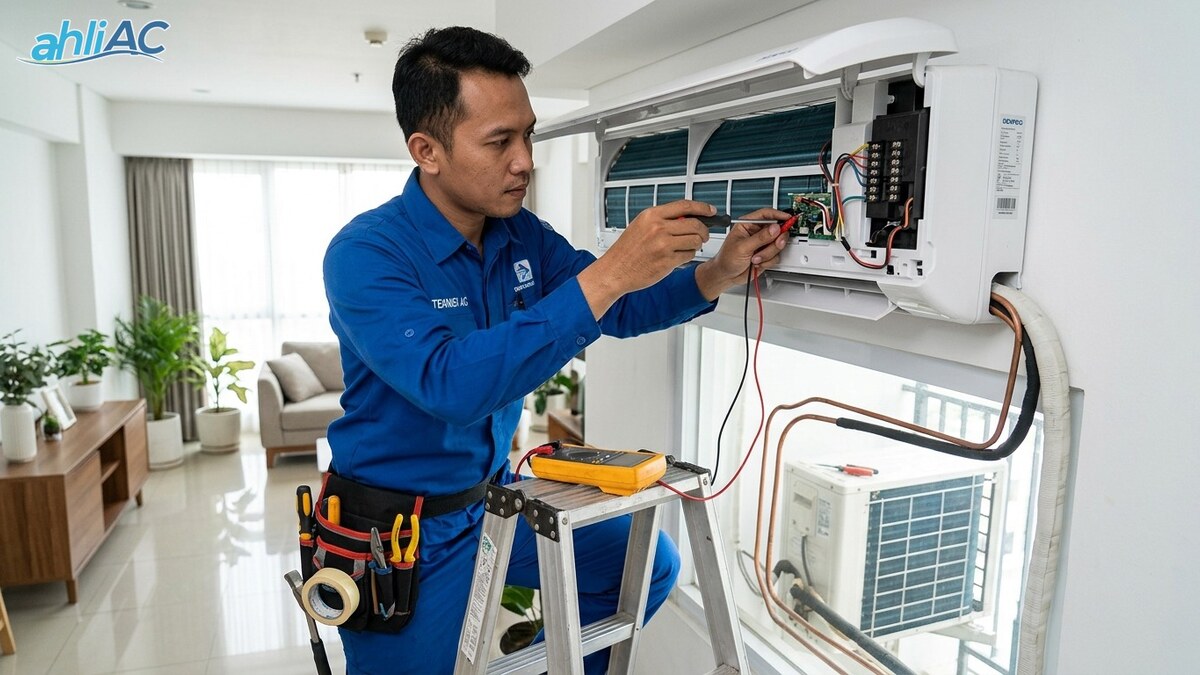
Commissioning & Verification: Start the system, log operating parameters (superheat, subcooling, discharge temperatures, and running amperage), and conduct a final leak detection audit.
Long-Term Success and Corporate Sustainability Metrics
A retrofit’s true success is evaluated by its long-term reliability and its positive impact on ESG goals. Adhering to official Copeland retrofit standards ensures the system operates at peak thermodynamic efficiency for years to come.
Documentation and Preventive Maintenance
-
Comprehensive Logging: Record the new compressor model, refrigerant type, POE oil grade, baseline operating pressures, superheat/subcooling values, and completion date. Attaching a physical retrofit tag to the unit is critical for future service technicians.
-
Proactive Maintenance: Schedule regular inspections of coil cleanliness, electrical amperage draw, and system pressures. Robust maintenance sustains energy efficiency, prevents refrigerant leaks, and actively reduces greenhouse gas emissions—proving that operational excellence and environmental responsibility go hand-in-hand.
Frequently Asked Questions (FAQ)
What are the primary risks of ignoring Copeland scroll industrial retrofit standards?
Bypassing official standards risks severe system loss, including compressor motor burnout, thermodynamic inefficiency, improper oil return, acid formation, safety hazards from incorrect pressure ratings, and regulatory non-compliance fines.
Can all legacy Copeland Scroll compressors be retrofitted with modern HFC/HFO refrigerants?
No. Compatibility depends on the specific compressor model, motor displacement, and pressure vessel rating. Always consult Emerson’s official application engineering bulletins or an authorized HVAC application engineer before selecting a replacement refrigerant.
How long does a typical POE oil conversion and system flushing take?
While draining and replacing the compressor oil takes only a few hours, a thorough line flushing, nitrogen purge, and deep vacuum evacuation (down to 500 microns) can take anywhere from a full day to several days depending on the industrial tonnage and circuit complexity.
How does a retrofit project ensure long-term GWP environmental compliance?
By transitioning to EPA/F-Gas approved low-GWP refrigerants (such as R-448A or R-449A), establishing zero-tolerance leak detection protocols, and maintaining rigorous refrigerant tracking documentation.
How does an industrial HVAC retrofit improve corporate sustainability (ESG) metrics?
It directly reduces Scope 1 emissions (by eliminating high-GWP/ODP refrigerants and preventing atmospheric leaks) and Scope 2 emissions (by lowering electrical power consumption through improved compressor motor efficiency).
Conclusion: A Smart B2B Investment for Industrial HVAC
Adopting Copeland scroll industrial retrofit standards is far more than a technical necessity; it is a strategic B2B investment that yields measurable dividends. From achieving strict environmental compliance and lowering energy OPEX to enhancing corporate sustainability metrics, a professionally executed retrofit future-proofs your industrial facilities.
For facility managers and plant engineers, adhering to these standards is the bedrock of operational reliability, safety, and environmental stewardship. Do not let legacy equipment compromise your productivity. Contact the HVAC specialists at ahliAC.com today to engineer a tailored, compliant retrofit strategy for your industrial facility.