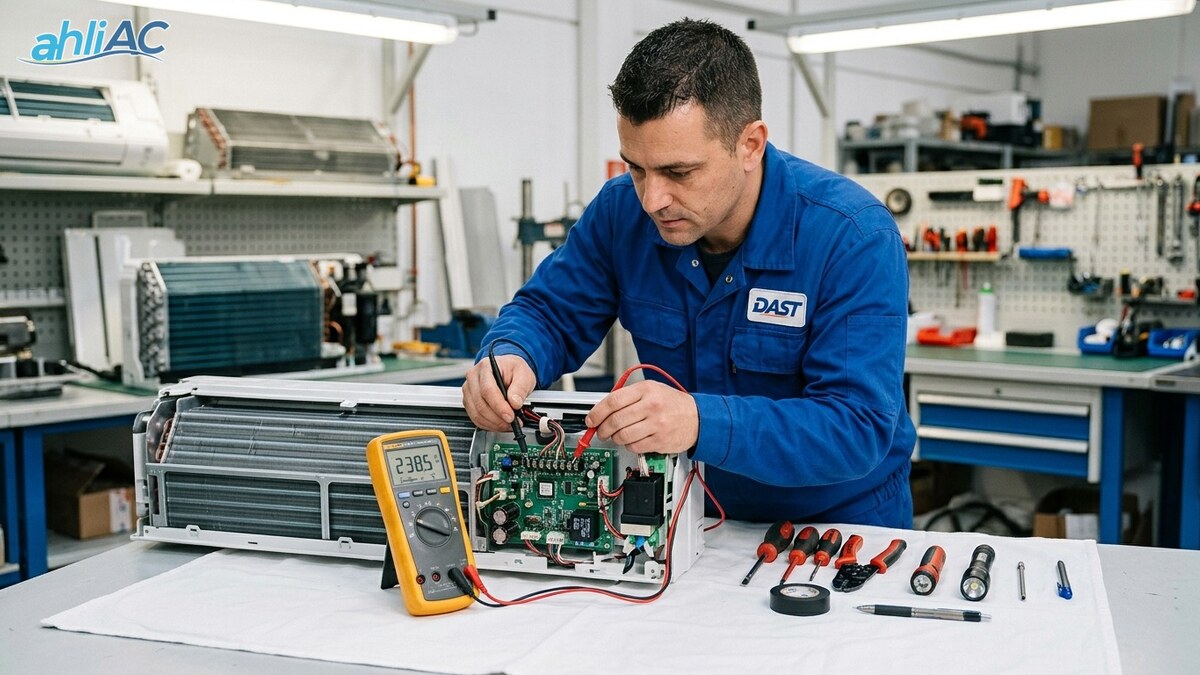
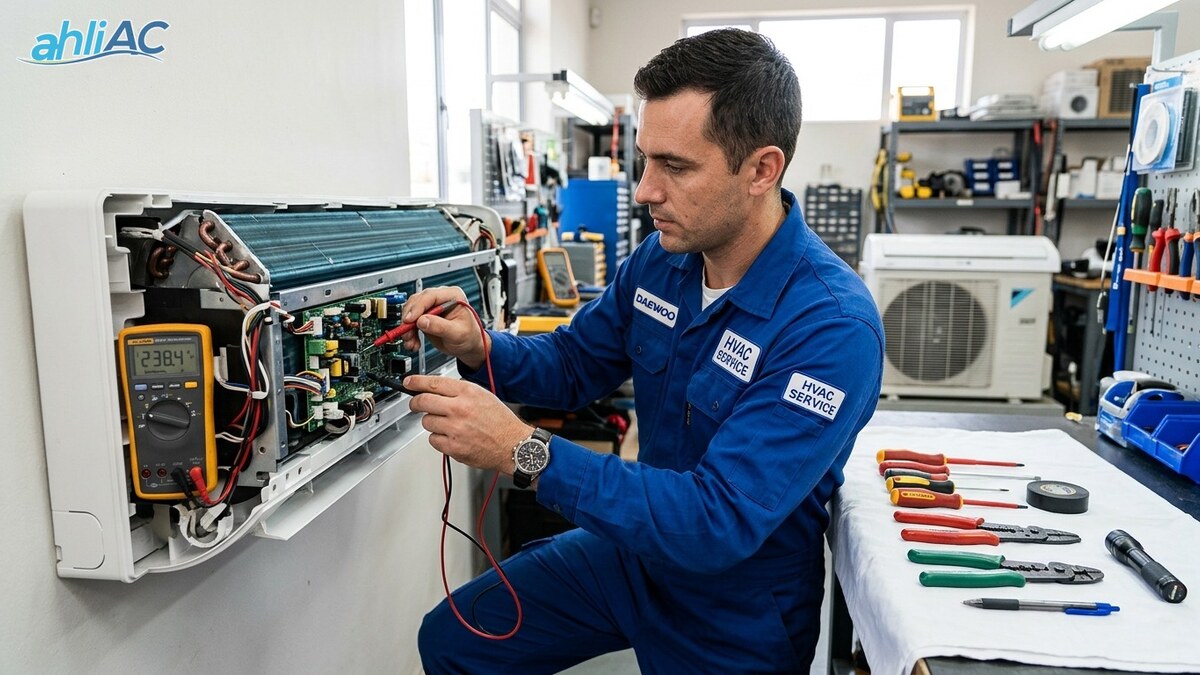
5 Warning Signs You Need AC Duct Cleaning Services
Many building owners and homeowners diligently wash their indoor and outdoor AC units every three months, yet find themselves puzzled as to why the indoor air quality still feels “heavy” or dusty. The answer is often hidden behind the ceiling inside the ducting paths that stretch for dozens of meters.
In the HVAC world, ducting serves as the lungs of a building. If the lungs are dirty, the entire system works harder, consumes more electricity, and eventually spreads contaminants to every corner of the room. Relying on professional AC duct cleaning services is no longer a matter of aesthetics; it is an operational necessity to maintain the efficiency of your cooling system.
Why Air Paths Are Often the “Blind Spot” for Property Owners
Technically, ducting systems are closed environments. This creates an “out of sight, out of mind” perception. In reality, the air we breathe indoors circulates through these paths dozens of times a day. Over time, fine dust, carpet fibers, and pollen stick to the damp walls of the ducting.
This condition is worsened if your HVAC system has minor leaks at pipe joints or if the insulation is starting to peel. Particles from the outside are sucked in and settle. This accumulation of particulate matter increases air resistance, or what we technically call static pressure. The higher the static pressure, the shorter the lifespan of your compressor, as it is forced to operate beyond its normal cooling capacity.
Key Indicators That You Need Professional Intervention Immediately

How do you know it’s time to seek AC duct cleaning services without having to climb into the ceiling? Here are field observations our ahliAC technicians frequently encounter across projects:
1. Persistent Musty Odors in the Room
Have you ever turned on the AC and smelled something like damp cloth or wet soil? This is a strong indicator of mold or fungal growth within the ducting. The high humidity in tropical climates makes air paths the perfect breeding ground for microbes. If this odor persists even after the indoor unit has been cleaned, the source of the problem is likely inside the air distribution path.
2. Visible Dust Deposits Near Diffusers and Grilles
Take a look at the air outlets (diffusers) on your ceiling. If there is a black or grey residue clinging to the blades, it’s a sign that the ducting is saturated with dust. Under normal conditions, the AC filter should catch these particles. However, once dust accumulates inside the paths past the filter, the outgoing air carries this “dusting” throughout the room.
3. Sudden Onset of Respiratory Health Issues
This is the most frequently ignored sign. If employees in an office or family members at home start sneezing, coughing, or experiencing itchy eyes only when they are in an air-conditioned room, it is a red flag. Poor Indoor Air Quality (IAQ) caused by dirty ducting can trigger asthma and allergies. Regular cleaning via AC duct cleaning services significantly reduces this biological pollutant load.
4. Decreased Airflow and Unstable Static Pressure
If you feel the airflow in one room is very strong while in another it feels weak, there is likely a blockage in the ducting branches. Dust mixed with moisture can form a thick layer resembling sediment that narrows the diameter of the air path. Technically, this disrupts the heat load distribution and makes the HVAC system unbalanced.
5. Evidence of Pests or Microbial Contamination
In some extreme cases in commercial buildings, rarely maintained ducting can become a “highway” for pests like rodents or insects. The presence of pest droppings inside air paths is not just unpleasant; it is a serious health risk (such as Hantavirus). If our technicians find these traces during inspection, total cleaning using HEPA vacuum methods is absolutely mandatory.
The Technical Toll of Dirty Ducting on Internal HVAC Components

At ahliAC, we believe dirty ducting isn’t just about dirty air; it’s about the machine’s lifespan. Dust escaping from the ducting will be sucked back into the evaporator unit. When the evaporator is covered in dust, heat exchange is hindered. As a result, the refrigerant does not evaporate perfectly, risking liquid returning to the compressor (liquid slugging). This is an instant recipe for a fatal and expensive breakdown.
Furthermore, the workload on the blower motor will increase to overcome the aforementioned air resistance. The result? Ampere consumption spikes, and your electricity bill bloats without you realizing why the room temperature never seems to get cold enough.
Integrated Solutions from ahliAC for Peak Performance

We understand that every HVAC system has different characteristics, from simple Split Duct systems to complex VRV/VRF setups. The AC duct cleaning services from ahliAC go beyond just vacuuming dust. We take a holistic approach:
- Visual Camera Inspection: We use robotic cameras to see the ducting’s condition before any action is taken.
- High-Pressure Vacuum with HEPA Filtration: Ensuring the lifted dust is not released back into the room’s air.
- Sanitization and Disinfection: Applying anti-microbial fluids to ensure mold doesn’t return quickly.
- Insulation Check: We ensure there are no leaks that could serve as entry points for new dust.
Maintaining your ducting is a long-term investment in the comfort and health of a building’s occupants. Don’t wait until your HVAC system fails completely or your health is compromised.
Ducting Condition Comparison
| Symptom | Normal Condition | Needs Cleaning | Impact on System |
| Airflow | Smooth & Stable | Obstructed/Weak | Increased Blower Load |
| Scent | Neutral | Musty/Damp | Microbial Contamination |
| AC Filter | Lasts 3 Months | Black in 2 Weeks | Drop in Cooling Efficiency |
| Electricity | Stable | 15-20% Increase | Overheated Compressor |
FAQ (Frequently Asked Questions)
1. How often should I use AC duct cleaning services?
Ideally, for office or commercial buildings, cleaning should be done every 2-3 years. However, if the surrounding environment is dusty or if there has been recent renovation, annual inspections are highly recommended.
2. Will the cleaning process make my room dirty?
Not if done professionally. ahliAC uses a closed-loop vacuum system and workspace protection to ensure that the dust inside the ducting goes directly into the vacuum container without contaminating your furniture.
3. How long does the duct cleaning process usually take?
The duration depends on the length of the ducting path and the level of dirtiness. A standard residential home usually takes 4-6 hours, while office buildings are done by zone or after operational hours.
4. Is duct cleaning the same as a standard AC service?
Very different. Standard AC service only cleans the indoor unit (evaporator) and the outdoor unit (condenser). AC duct cleaning services clean the entire air pipe network that distributes the cold air.